Drums in the British Field Music
The Regimental Drum Major Association makes available the British Army's Infantry Drummer's Handbook, which contains a wealth of information about the history of the drums in the military in general and the British Army in particular.
The Drum-major was also cautioned to mind the morals and character of his drummers, as their growing up in the regiment might make them likely to become excellent noncomissioned officers, since "such boys, from being bred in the Regiment from their infancy, have a natural affection and attachment to it.." 1.
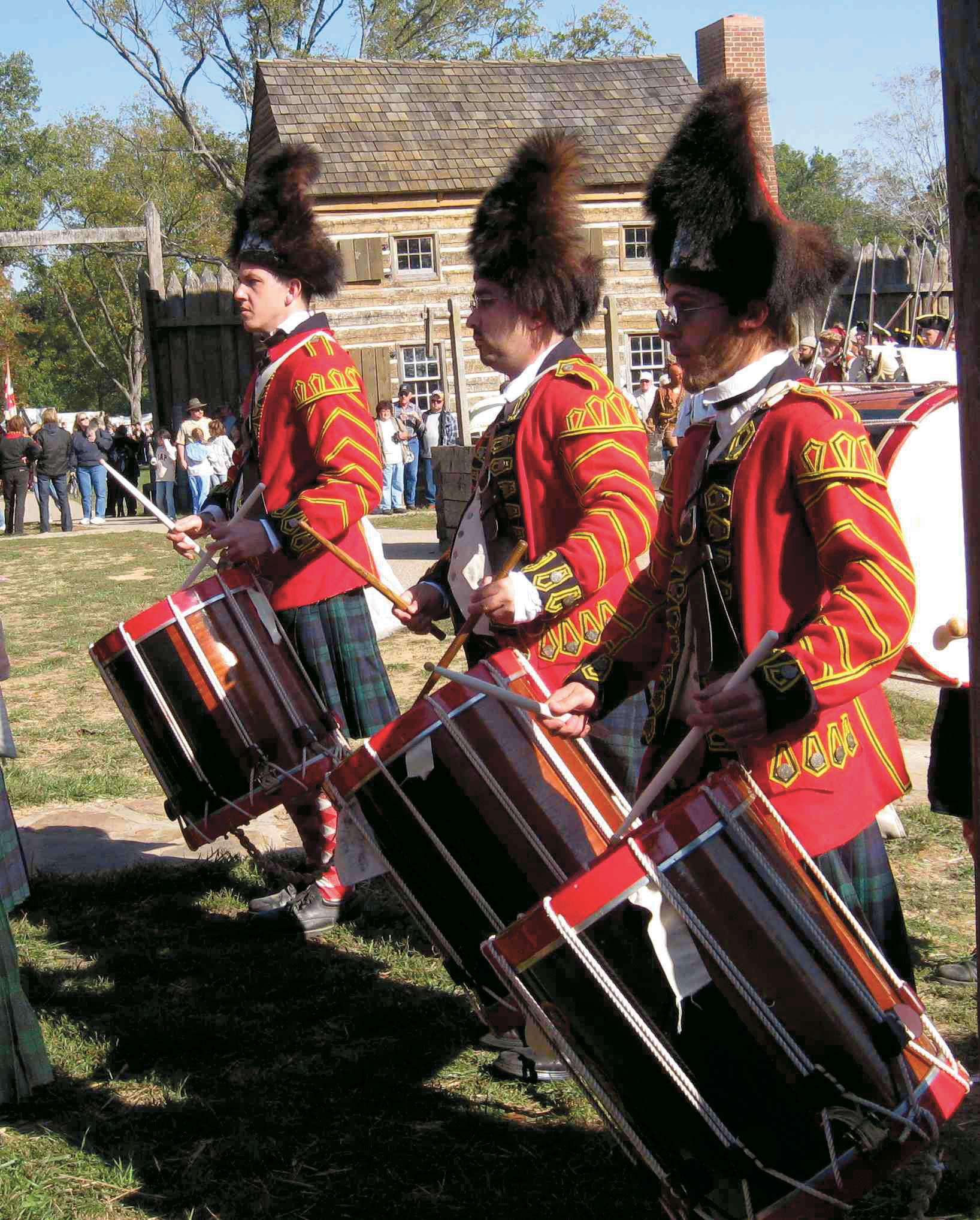
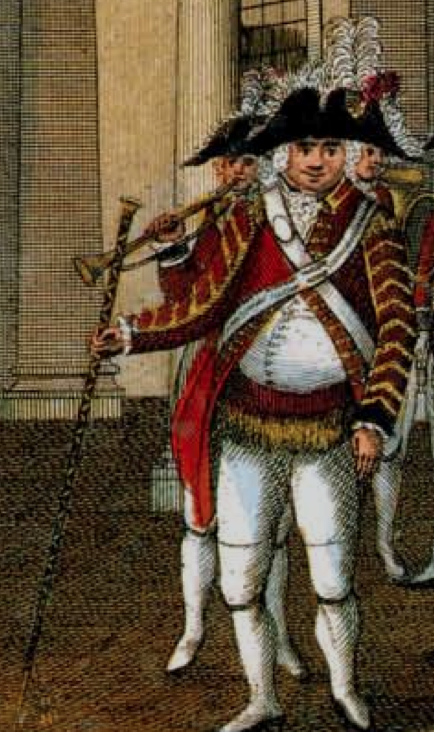
Uniform of the DrummersThe uniform of the drummers were many times fancier and brighter than the common soldier, due to his cerimonious function, as well as making him much more easy for the captain to locate him, the regiment's signalman. (Conversely, it also made him an obvious target to the enemy). The job of Drum-major was apparently one of high consequence and esteem, as his qualifications for selection included "An executing hand himself upon the drum, ... the method of giving instructions in a cool and intelligent manner, adapted to the early age of those he is to teach, activity, sobriety, and cleanliness... his behaivour must be an example to the Drummers, with whom he is to keep a distance requisite to enforce obedience...", as well as "A remarkable degree of honesty is also necessary in his character...".
The Drum-major was requested not to associate with the drummers, but to keep company with the non-commissioned officers, as "from the minute of his appointment, as he then becomes an Officer of consequence, and not to be looked on altogether in the light of a Drummer". 2 Additionally, the Drum-major's duties would include responsibility for the dress of his drummers, and as the regiment's postman. The Drum-major supervised lashings administered by the drummers, as well as ensuring that "no cat has more than nine tails".3 The British Drum-major was dressed even more elaborately than the common drummer. Cuthbertson noted "It should never be object to a Drum-major, that he is too great a coxcomb: such an appearance is rather to be encouraged, provided it does not exceed the bounds of proper respect to his superiors: his dress and appointments should all tend to promote that character as it is absolutely necessary for him to strut, and think himself a man of consequence, when marching at the head of the Drummers." 4
The Drums
Appearance of the Drums
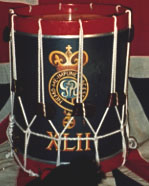
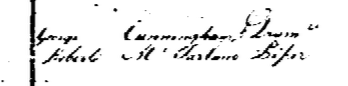
The drums to be wood. The drums of the 42nd were painted with the device ordered for the Regiment. 5 Our band carries snare drums, bass drums, and a tenor drum, each adding a distinct sound to the underlying beats. The drum sound of the 42nd is unlike anything else - different than the rhythms found in ancient fife and drum music, and a dramatically different ancient rudimental sound than today's pipe band. The Drummers of the 18th Century 42ndThe following lists of drummers are taken from muster rolls available in the UK National Archives, WO 12/5478 and WO 12/5479.
Footnotes: 1 Cuthbertson, Chap. IV, Sec XI, XII, XIII 2 Cuthbertson, Chap. IV, Sec I, II 3 Camus, Military Music, Chap. 1, p14 4 Cuthbertson, Chap. IV, Sec III 5 1768 Uniform Warrant psmith@42ndRHR.org http://www.42ndRHR.org Last modified: April 12, 2021 Copyright © 2013 Preston M. Smith and the 42nd Royal Highlanders, Inc. All rights reserved.
|